
Sharpen Your Hand Tools: Chisels, Plane Blades, and Saw Basics

A dull chisel is a slow chisel, and most woodworkers live with dull tools for years without realizing how much extra work they’re doing. This is the sharpening routine I keep at my bench, built around three water stones and a strop, that brings a neglected chisel back to hair-splitting sharp in under twenty minutes and then keeps it there with about ninety seconds of maintenance a week.
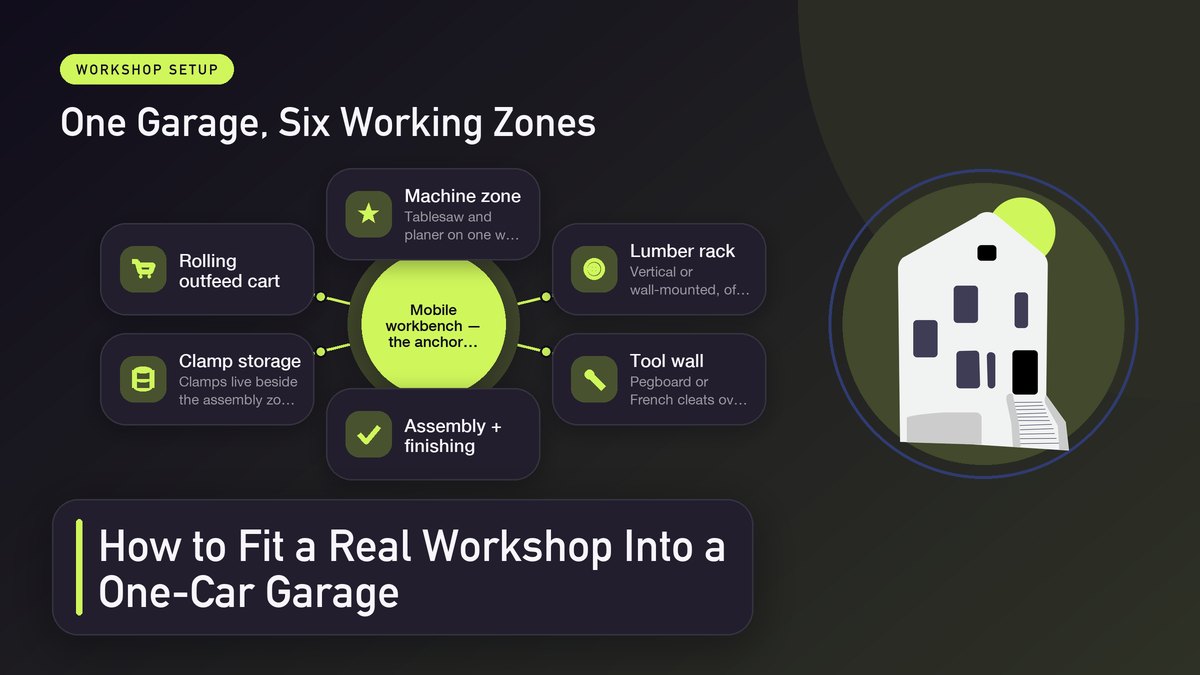

How to Fit a Real Workshop Into a One-Car Garage

A one-car garage gives you roughly 12 by 20 feet of raw potential, about 200 square feet, which is less than half the footprint most shop magazines assume you have. The right layout, good lighting, dust control, plus one or two mobile workbenches, will turn that tight box into a shop that actually works, car included or not. This is the setup I’d build for a friend in a rented suburban garage, with real measurements, honest trade-offs, plus the mistakes I’ve already made so you can skip them.

Dust Collection for Small Shops: What Actually Works

Sawdust is the one workshop problem every woodworker shares and almost nobody fixes properly until their third or fourth upgrade. This guide separates the two different jobs your dust setup has to do, explains shop vac versus dust collector in plain numbers, and lays out the cheap moves that cut the dust in your air by an order of magnitude. No five-figure ducting required.

Workshop Safety Habits Every Hobby Maker Should Build

Workshop accidents rarely look dramatic. A board jumps, a fingertip brushes a cutter, the room fills with dust for the thousandth time, and the damage is done before you finish blinking. This is a practical guide to the four causes that actually hurt hobby makers — kickback, blade contact, dust, and noise — and the cheap habits and gear that prevent them without turning your shop into a padded cell.