Handmade Tech and Wood Gifts People Actually Want

A store gift card says “I remembered the date.” A handmade gift says “I thought about you for three weekends.” Here’s my working list of maker projects that genuinely land — engraved boxes, smart lamps, desk organizers, small electronics — plus how to pick the right one for the person, plan backwards from the occasion, and batch-build a whole gift list without losing your mind.

Upcycling Wood: Turning Pallets and Salvage Into Useful Projects

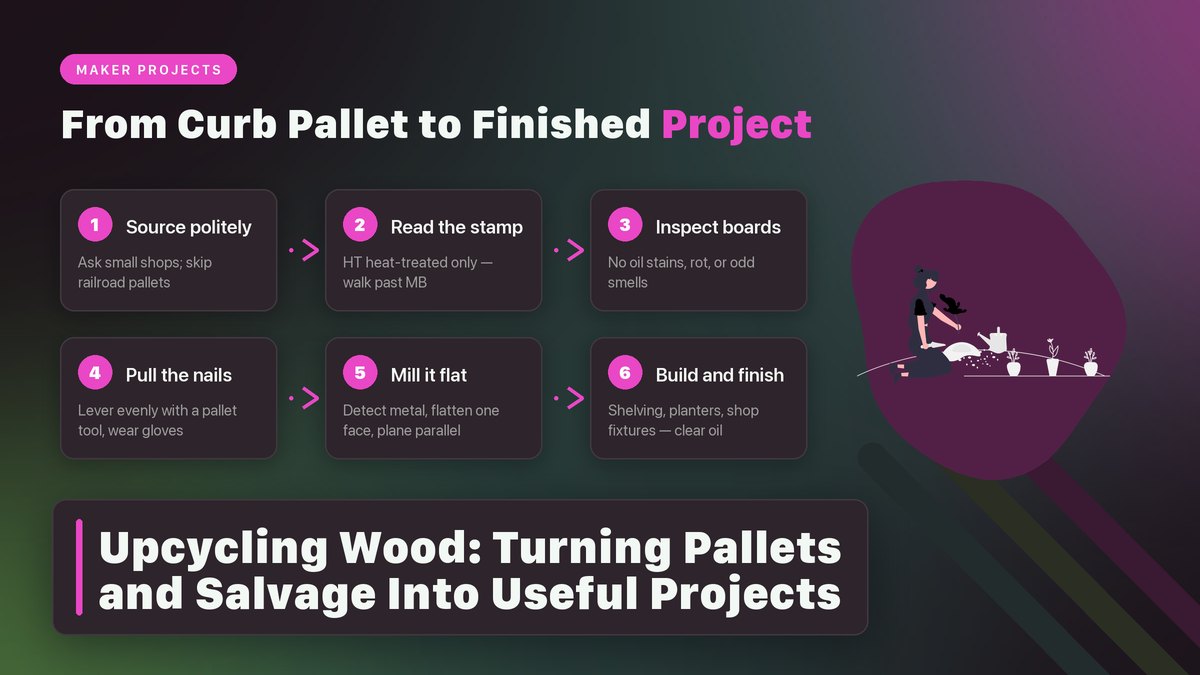
Good lumber is sitting in dumpsters, behind warehouses, and on curbs all over your town, and most of it is free for the asking. This is a practical walk through the whole reclaimed-wood pipeline: where to find pallets and salvage, how to read the stamp on a pallet so you don’t bring home something toxic, how to pull nails and flatten twisted boards, and which projects are actually worth your weekends.

Organize Your Workshop With 3D Prints: Brackets, Bins, and Holders

A messy shop isn’t a character flaw. It’s a measurement problem. Once you can measure the thing you want to hold — the drill bits, the cables, the jars of screws — a 3D printer will happily cut you a custom bracket for pennies of filament. This is the practical route: how to size a print to the real object, where to steal good designs, which CAD tool won’t fight you, and the print settings that make organizers strong enough to survive a decade of grabbing.

Sharpen Your Hand Tools: Chisels, Plane Blades, and Saw Basics

A dull chisel is a slow chisel, and most woodworkers live with dull tools for years without realizing how much extra work they’re doing. This is the sharpening routine I keep at my bench, built around three water stones and a strop, that brings a neglected chisel back to hair-splitting sharp in under twenty minutes and then keeps it there with about ninety seconds of maintenance a week.

How to Fit a Real Workshop Into a One-Car Garage

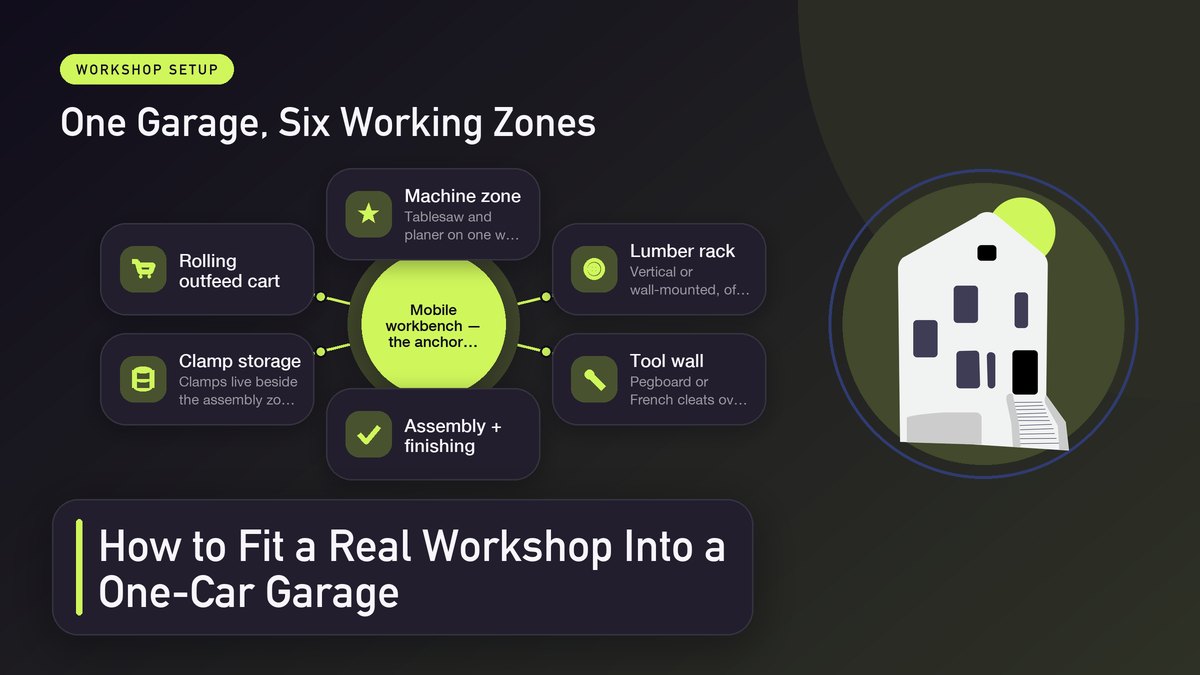
A one-car garage gives you roughly 12 by 20 feet of raw potential, about 200 square feet, which is less than half the footprint most shop magazines assume you have. The right layout, good lighting, dust control, plus one or two mobile workbenches, will turn that tight box into a shop that actually works, car included or not. This is the setup I’d build for a friend in a rented suburban garage, with real measurements, honest trade-offs, plus the mistakes I’ve already made so you can skip them.

Dust Collection for Small Shops: What Actually Works

Sawdust is the one workshop problem every woodworker shares and almost nobody fixes properly until their third or fourth upgrade. This guide separates the two different jobs your dust setup has to do, explains shop vac versus dust collector in plain numbers, and lays out the cheap moves that cut the dust in your air by an order of magnitude. No five-figure ducting required.

Workshop Safety Habits Every Hobby Maker Should Build

Workshop accidents rarely look dramatic. A board jumps, a fingertip brushes a cutter, the room fills with dust for the thousandth time, and the damage is done before you finish blinking. This is a practical guide to the four causes that actually hurt hobby makers — kickback, blade contact, dust, and noise — and the cheap habits and gear that prevent them without turning your shop into a padded cell.

Soldering for Beginners: Your First Solid Joints and Common Mistakes

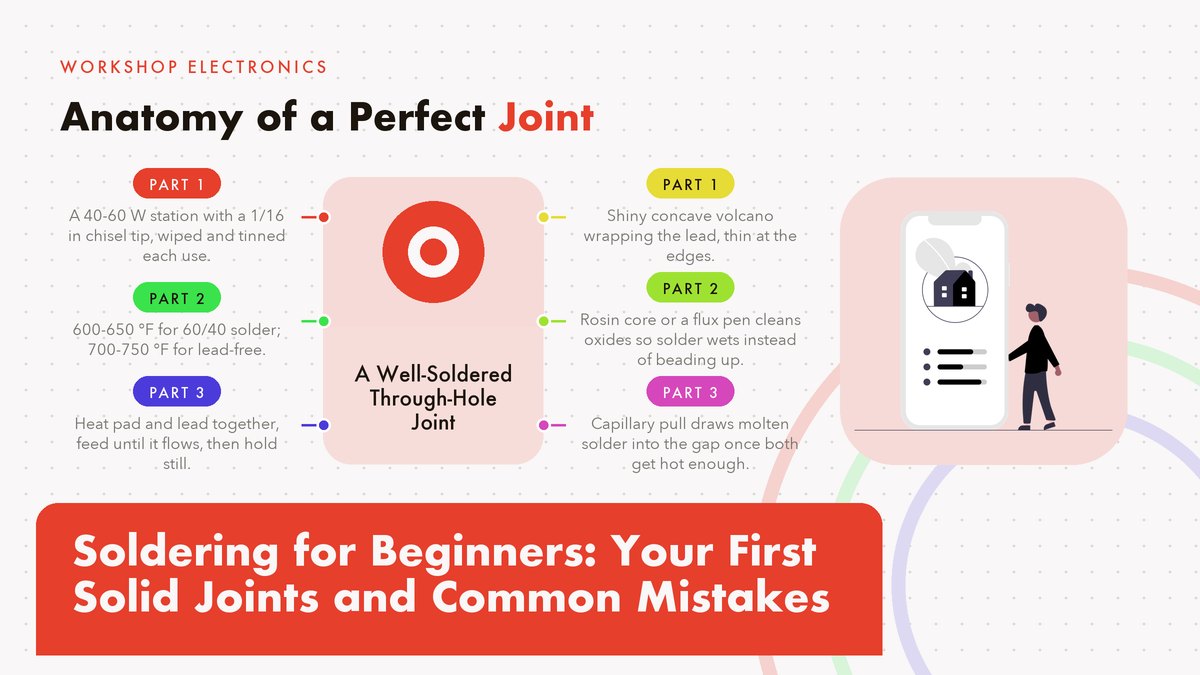
Soldering is the skill that turns a pile of parts and a blank circuit board into something that actually works, and it’s far more forgiving than it looks once you understand what the molten metal is doing. No steady hand required. This is the technique I’d teach a friend over an afternoon at the bench: which iron to buy, how to tin a tip, how to land a through-hole joint in about three seconds, and how to spot the handful of bad joints that cause almost every beginner failure.